Plant profile
Aloe vera
Aloe vera (L.) Burm.f.
Family: Asphodelaceae · Genus: Aloe
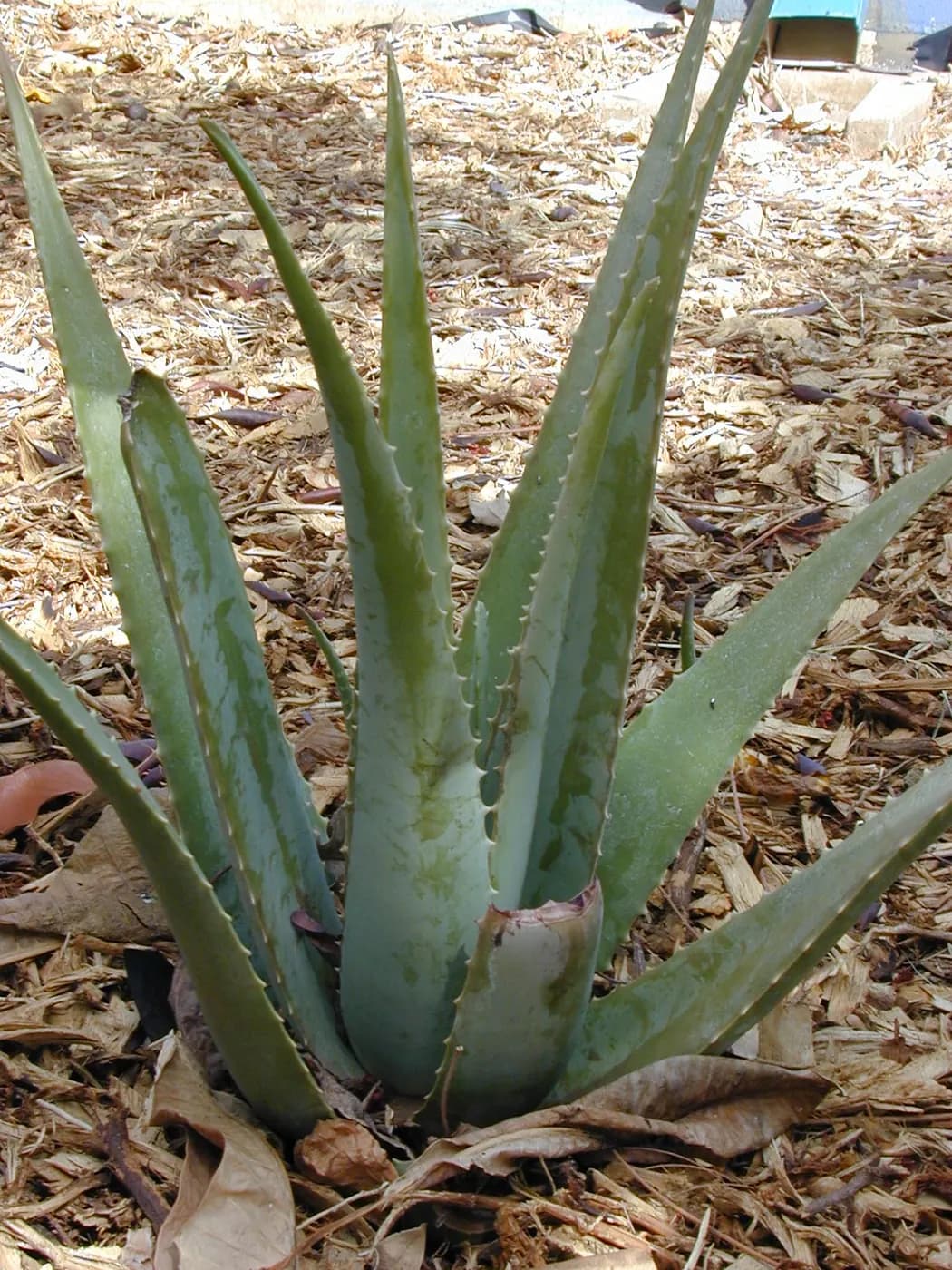
Medicinal succulent with fleshy leaves. Little water, lots of light, free-draining mix.
From Wikipedia
Aloe vera is a succulent plant species of the genus Aloe. It is widely distributed, and is considered an invasive species in many regions of the world.
Aloe vera — Text CC BY-SA. See the original article.
Open-data facts
- Life form
- Perennial succulent: less watering and plenty of light usually go hand in hand.
- Climate
- Adapted to desert or dry shrubland climates.
- Origin / area
- The typical geographical origin is: Northern Oman (Hajar Mountains).
- Native distribution
- The plant originates from these areas: Oman, Arabian Peninsula, Temperate Asia.
- Documented uses
- Medicines · Materials · Environmental · ornamental
Traits (USDA)
- Botanical group
- It's a monocot: the flowers usually have parts in multiples of three.
- Duration
- It has a perennial cycle: it grows, rests, and re-sprouts in the following seasons.
- Growth habit
- Growth form: herbaceous (not typical grass or shrub).
Recommended products for Aloe vera
Ecological interactions
Hosts these species:
Phomopsis sp., Uromyces aloes, Physarum pusillum, Phoma, Macrophoma, Spegazzinia deightonii, Alternaria, Didymellaceae…
They consume it:
Apis mellifera, Philaenus spumarius, Trigona spinipes, Icterus cucullatus, Anthracothorax dominicus, Polybia plebeja, Frieseomelitta nigra, Leptocoma zeylonica…
Basic care
- Watering
- Water only when the pot feels light and the soil is dry.
- Light
- Without enough light it weakens and loses vigour.
- Temperature
- If temperatures plunge, move it somewhere more sheltered.
- Humidity
- Don’t park it where condensation is constant.
Pet toxicity
Leaves and stems are not for pets to play with or eat.
Cats: yes (toxic). Dogs: yes (toxic).
Sources
- Wikidata (Q80079) — taxonomic data CC0
- GBIF (2777724) — taxonomy and vernacular names
- POWO / WCVP (530017-1) — taxonomy and distribution (WCVP/Kew, CC BY)
- WFO (wfo-0000758976) — world taxonomic checklist (CC0)
- USDA GRIN — uses and distribution (USDA GRIN, public domain)
- USDA PLANTS (ALVE2) — conservation characteristics (USDA PLANTS, public domain)
- Wikipedia — lead extract (CC BY-SA)
- GloBI — species interactions (CC BY)
- Care texts are Botanico templates chosen by each plant’s care level (guidance only).