Plant profile
tea tree
Melaleuca alternifolia (Maiden & Betche) Cheel
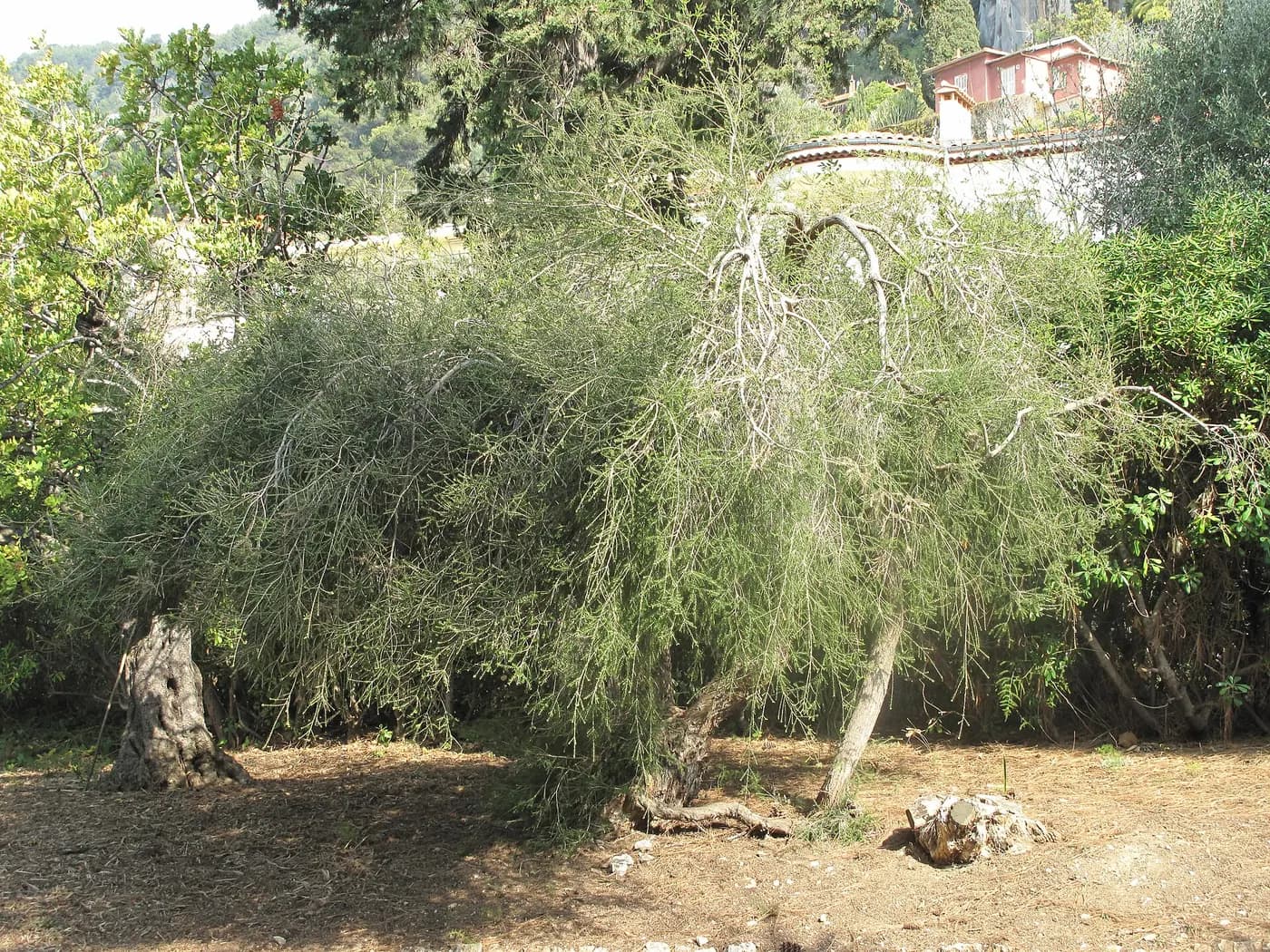
The tea tree is an outdoor plant known for its aromatic foliage and rough bark. It thrives in well-drained soils and full sun.
From Wikipedia
Melaleuca alternifolia, commonly known as tea tree, is a species of tree or tall shrub in the myrtle family, Myrtaceae. Endemic to Australia, it occurs in southeast Queensland and the north coast and adjacent ranges of New South Wales where it grows along streams and on swampy flats, and is often the dominant species where it occurs.
Melaleuca alternifolia — Text CC BY-SA. See the original article.
Open-data facts
- Life form
- Grows as a woody clump (shrub).
- Climate
- Subtropical climate: ideal with protection against intense cold.
- Origin / area
- The typical geographical origin is: Queensland to NE. New South Wales.
Recommended products for tea tree
Ecological interactions
Serves as a host to:
BOLD:AAA3070, Pantoea ananatis, Elsinoe eelemani, Austropuccinia psidii, Calonectria reteaudii
Basic care
- Watering
- Medium frequency; adjust for heat and pot size.
- Light
- Ideal on a terrace, in a garden bed, or a sunny balcony.
- Temperature
- If temperatures plunge, move it somewhere more sheltered.
- Humidity
- In dry winters, watch leaves and watering—don’t overdo either.
Pet toxicity
Not a safe plant for animals to nibble on leaves or stems.
Cats: yes (toxic). Dogs: yes (toxic).
Sources
- Wikidata (Q782073) — taxonomic data CC0
- GBIF (5416091) — taxonomy and vernacular names
- POWO / WCVP (597833-1) — taxonomy and distribution (WCVP/Kew, CC BY)
- WFO (wfo-0000239396) — world taxonomic checklist (CC0)
- Wikipedia — lead extract (CC BY-SA)
- GloBI — species interactions (CC BY)
- Care texts are Botanico templates chosen by each plant’s care level (guidance only).