Plant profile
Disa forficaria
Disa forficaria Bolus
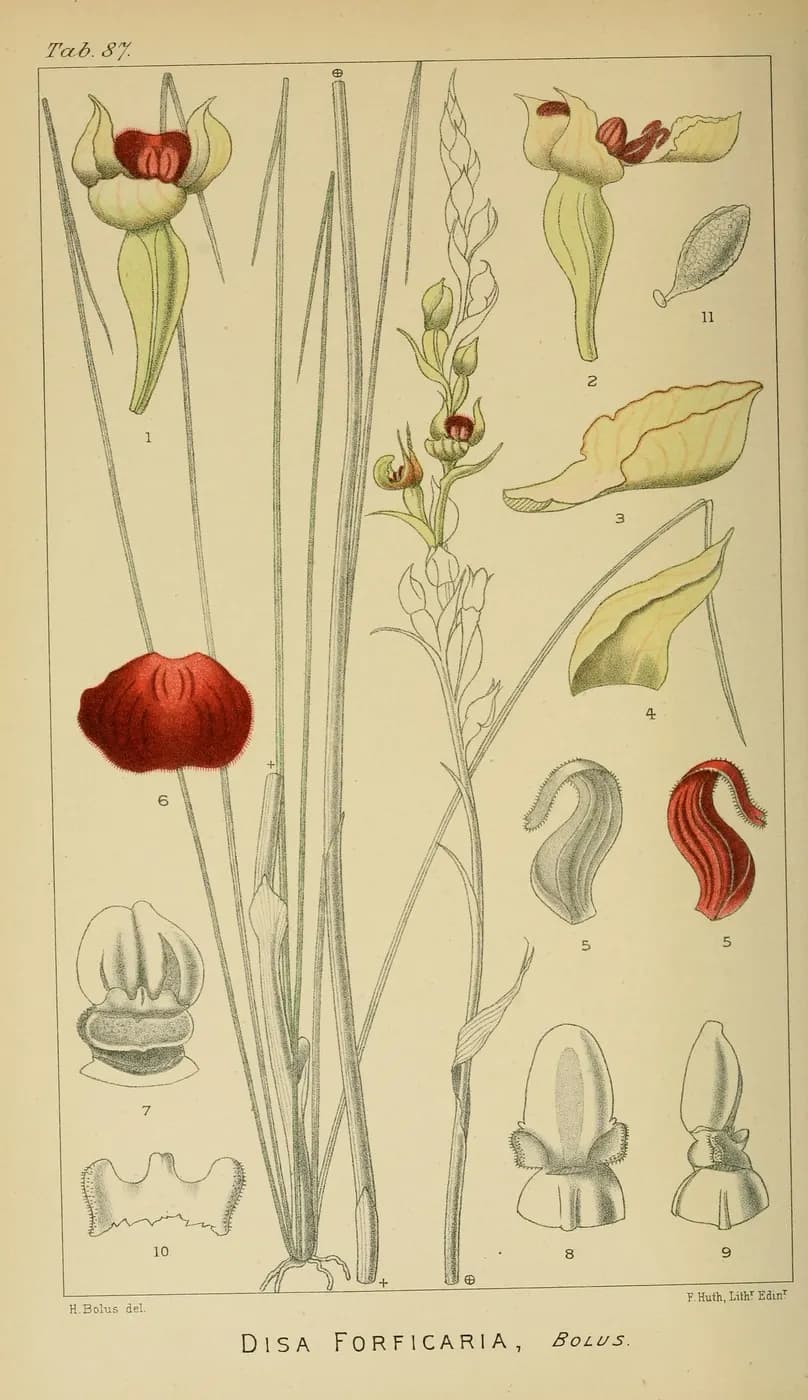
Disa forficaria is a plant suitable for both indoor and outdoor cultivation, characterized by its attractive flowers and preference for well-drained soils.
From Wikipedia
Disa forficaria is a perennial plant and geophyte belonging to the genus Disa and is part of the fynbos. The plant is endemic to the Western Cape. The plant occurs at Cape Peninsula, Du Toitskloof, Hottentots Holland Mountains, Houwhoek and Groenland. There are only five plants at a herbarium, all collected before 1966. In 2016, after decades of no confirmed sightings, a single plant was seen flowering at Fernkloof Nature Reserve. From this one plant, a team of scientists were able to determine the pollination syndrome involved sexual mimicry to attract male longhorn beetles.
Disa forficaria — Text CC BY-SA. See the original article.
Open-data facts
- Life form
- Vital form of tuberous geophyte: cycle with a dormancy period.
- Climate
- Subtropical climate: balance light, watering, and winter shelter.
- Origin / area
- The typical geographical origin is: SW. Cape Prov..
Basic care
- Watering
- Don’t waterlog, but don’t leave it bone-dry for days either.
- Light
- Medium-high light without long stretches of direct rays.
- Temperature
- A stable temperate climate supports growth.
- Humidity
- In dry winters, watch leaves and watering—don’t overdo either.
Pet toxicity
Generally considered low-risk for cats and dogs.
Cats: no (typical guidance). Dogs: no (typical guidance).
Sources
- Wikidata (Q10266927) — taxonomic data CC0
- GBIF (2783967) — taxonomy and vernacular names
- POWO / WCVP (630117-1) — taxonomy and distribution (WCVP/Kew, CC BY)
- WFO (wfo-0000944382) — world taxonomic checklist (CC0)
- Wikipedia — lead extract (CC BY-SA)
- Care texts are Botanico templates chosen by each plant’s care level (guidance only).