Plant profile
Polypodium vulgare
Polypodium vulgare L.
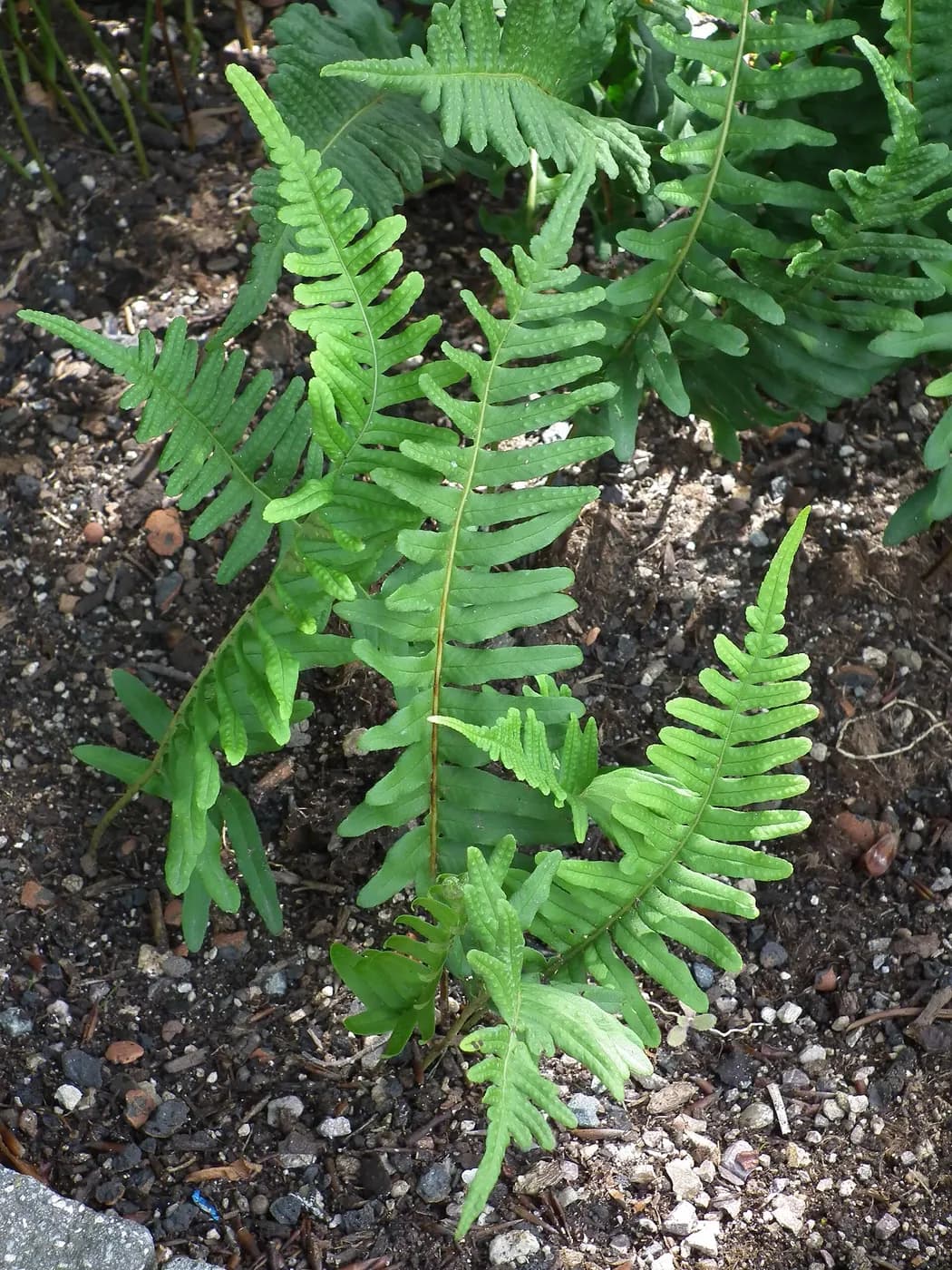
Polypodium vulgare is a fern suitable for both indoor and outdoor cultivation, characterized by its lush green fronds. It thrives in humid environments with partial shade.
From Wikipedia
Polypodium vulgare, the common polypody, is an evergreen fern of the family Polypodiaceae. The name is derived from Greek poly- ("many") and pous, podos ("foot"). Polypody has traditional uses in cooking for its aroma and sweet taste, and in herbal medicine as a purgative and vermifuge. This species is expansive and highly adapted to many environments.
Polypodium vulgare — Text CC BY-SA. See the original article.
Open-data facts
- Life form
- Epiphyte: aerial roots and little dependence on the soil.
- Climate
- Fits well in Mediterranean-type or similar temperate environments.
- Origin / area
- Documented area of origin: Madeira, Morocco, Temp. Eurasia, S. Africa, Kerguelen Is..
Ecological interactions
Part of the diet of:
Amphorophora ampullata, Idiopterus nephrelepidis, Apterona helicoidella, Turdus viscivorus, Turdus torquatus, Turdus pilaris, Turdus philomelos, Turdus merula…
Acts as a host plant for:
Milesina dieteliana, Mycosphaerella polypodii, Milesia pycnograndis, Milesia polypodii, Asterina, Mycosphaerella tyrolensis, Milesina polypodophila, Sphaerella tyrolensis…
Pathogens observed in this species:
Plectosphaera polypodii
Basic care
- Watering
- A regular moderate watering rhythm works best.
- Light
- Rotate the pot now and then for even growth.
- Temperature
- Prefers cooler rooms; avoid extreme dry heat.
- Humidity
- A middle humidity level keeps the plant steady.
Pet toxicity
Treat it as a pet-risk plant: distance and supervision.
Cats: yes (toxic). Dogs: yes (toxic).
Sources
- Wikidata (Q743883) — taxonomic data CC0
- GBIF (5274951) — taxonomy and vernacular names
- POWO / WCVP (300720-2) — taxonomy and distribution (WCVP/Kew, CC BY)
- WFO (wfo-0001107395) — world taxonomic checklist (CC0)
- Wikipedia — lead extract (CC BY-SA)
- GloBI — species interactions (CC BY)
- Care texts are Botanico templates chosen by each plant’s care level (guidance only).