Plant profile
Swiss cheese plant
Monstera deliciosa Liebm.
Family: Araceae · Genus: Monstera
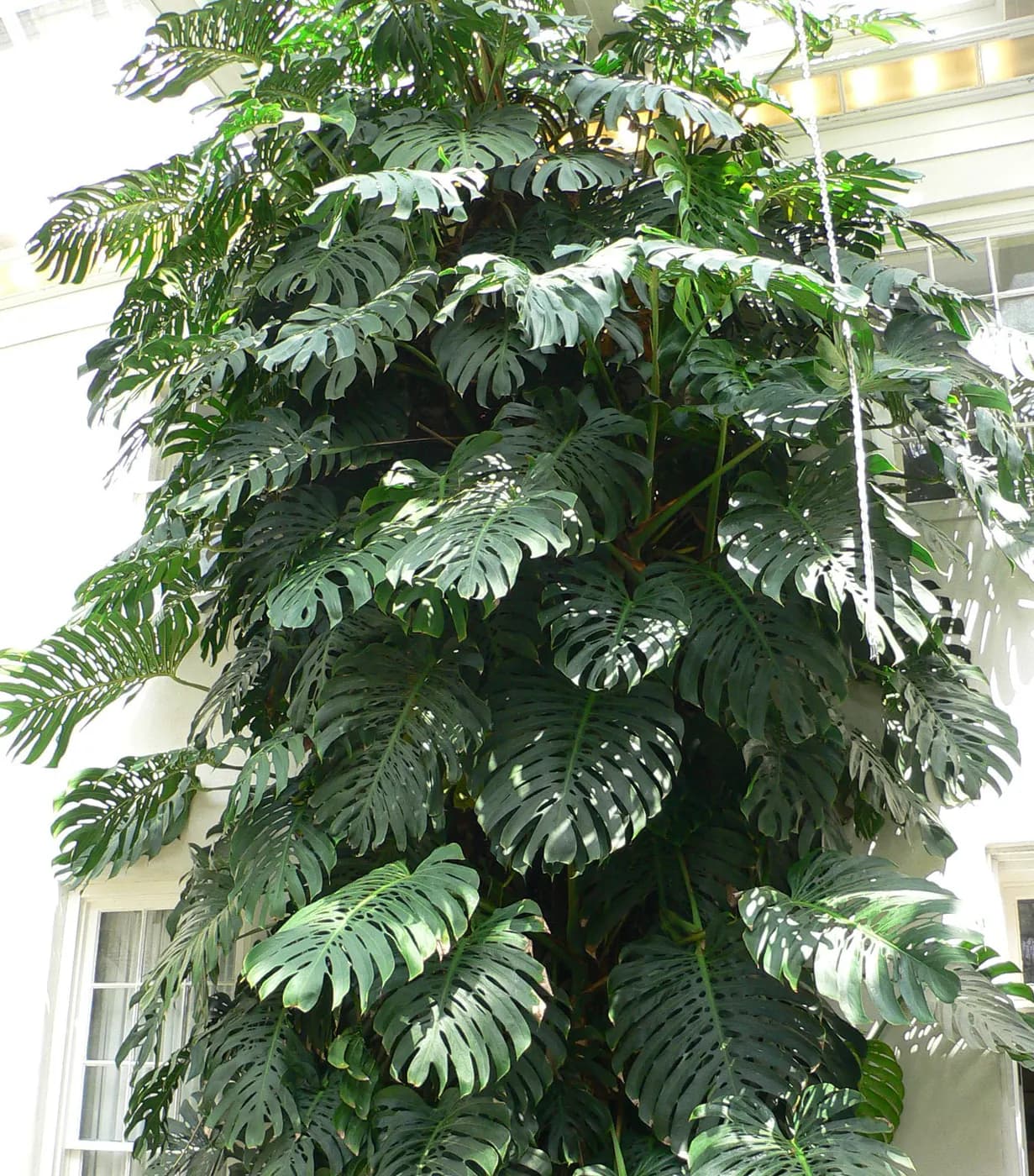
Classic indoor plant with large fenestrated leaves. Grows fast in bright indirect light with moderate watering.
From Wikipedia
Monstera deliciosa, the Swiss cheese plant or split-leaf philodendron, is a species of flowering plant. The common name "Swiss cheese plant" is also used for the related species from the same genus, Monstera adansonii. The common name "split-leaf philodendron" is also used for the species Philodendron bipinnatifidum.
Monstera deliciosa — Text CC BY-SA. See the original article.
Open-data facts
- Life form
- Lives climbing as a liana in the canopy or on supports.
- Climate
- Originates from humid tropics: frequent rain and little extreme drought.
- Origin / area
- According to taxonomic sources, it comes from: Mexico (Veracruz, Oaxaca, Chiapas) to Guatemala.
- Native distribution
- Cited native regions: Gulf of Mexico, Mexico, North America · Southwest Mexico, Mexico, North America · Southeast Mexico, Mexico, North America · Guatemala, Central America, South America.
- Documented uses
- Human food · Environmental · ornamental · Vertebrate poisons
Traits (USDA)
- Botanical group
- Monocot means that the seedling starts with a single initial leaf.
- Duration
- Perennial plant: once established, it can accompany you through many seasons.
- Growth habit
- Climbing-herbaceous habit: ideal with a light stake indoors.
Recommended products for Swiss cheese plant
Ecological interactions
Acts as a host plant for:
Phytophthora nicotianae, Leptostromella elastica, Colletotrichum philodendri, Macrophoma philodendri, Phyllosticta, Diplodia, Dothiorella vagans, Mycosphaerella…
Species that feed on this plant:
Ischnaspis longirostris, Sophonia orientalis
Basic care
- Watering
- Water thoroughly, then wait for the surface to dry again.
- Light
- Good filtered brightness; direct sun can scorch leaves.
- Temperature
- Keep off blasting radiators and open cold doors.
- Humidity
- Appreciates higher-than-average air humidity.
Pet toxicity
Treat it as a pet-risk plant: distance and supervision.
Cats: yes (toxic). Dogs: yes (toxic).
Sources
- Wikidata (Q161077) — taxonomic data CC0
- GBIF (2868241) — taxonomy and vernacular names
- POWO / WCVP (87478-1) — taxonomy and distribution (WCVP/Kew, CC BY)
- WFO (wfo-0000245734) — world taxonomic checklist (CC0)
- USDA GRIN — uses and distribution (USDA GRIN, public domain)
- USDA PLANTS (MODE) — conservation characteristics (USDA PLANTS, public domain)
- Wikipedia — lead extract (CC BY-SA)
- GloBI — species interactions (CC BY)
- Care texts are Botanico templates chosen by each plant’s care level (guidance only).