Plant profile
Snake plant
Dracaena trifasciata (Prain) Mabb.
Family: Asparagaceae · Genus: Dracaena
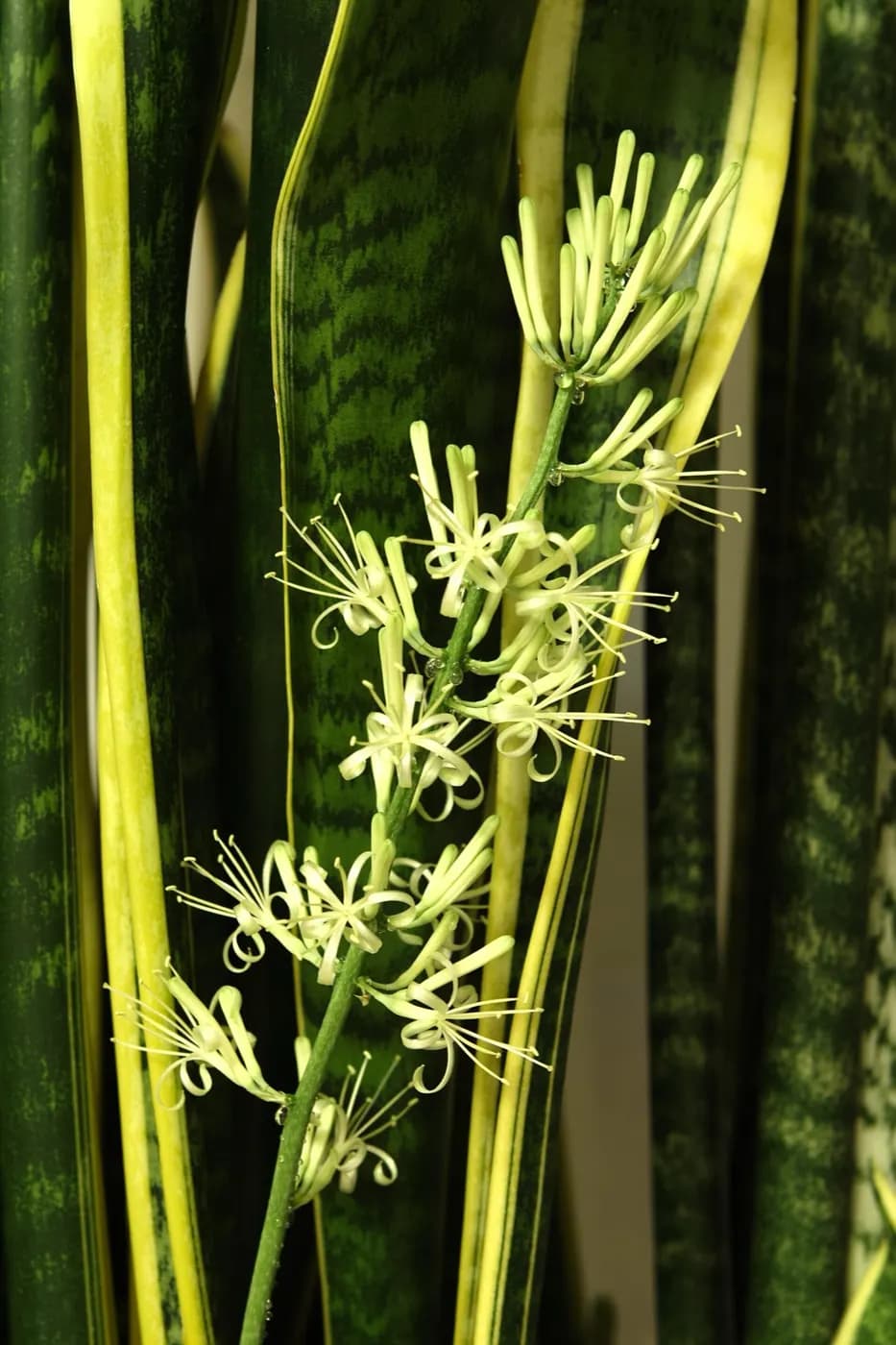
Very tough and beginner-friendly. Handles low light and infrequent watering.
From Wikipedia
Dracaena trifasciata is a species of flowering plant in the family Asparagaceae, native to tropical West Africa from Nigeria east to the Congo. It is most commonly known as the snake plant, Saint George's sword, mother-in-law's tongue, and viper's bowstring hemp, among other names. Until 2017, it was known under the synonym Sansevieria trifasciata. This plant is often kept as a houseplant due to its non-demanding maintenance; they can survive with very little water and sun.
Dracaena trifasciata — Text CC BY-SA. See the original article.
Open-data facts
- Life form
- Stores reserves in underground rhizomes and regrows from there.
- Climate
- Seasonally dry tropical climate.
- Origin / area
- Its geographical roots are located in: Southern Nigeria to West-Central Tropical Africa and Tanzania.
- Native distribution
- The native distribution by countries and regions includes: Nigeria, Western Tropical Africa, Africa · Central African Republic, West-Central Tropical Africa, Africa · Cameroon, West-Central Tropical Africa, Africa · Congo, West-Central Tropical Africa, Africa · Equatorial Guinea, West-Central Tropical Africa, Africa · Gabon, West-Central Tropical Africa, Africa · DR Congo, West-Central Tropical Africa, Africa · Tanzania, Eastern Tropical Africa, Africa.
Recommended products for Snake plant
Ecological interactions
Serves as a host to:
Paraboeremia putaminum, Colletotrichum capsici, Aspergillus niger, Rhizoctonia solani, Phytophthora sp., Gloeosporium sansevieriae, Meliola sansevieriae
Basic care
- Watering
- Keep the mix dry between waterings; don’t keep it constantly wet.
- Light
- If it stretches hard toward light, move it closer.
- Temperature
- Ideal in rooms that stay pleasant year-round.
- Humidity
- Prefers airy, not muggy, spaces.
Pet toxicity
Leaves and stems are not for pets to play with or eat.
Cats: yes (toxic). Dogs: yes (toxic).
Sources
- Wikidata (Q65936984) — taxonomic data CC0
- GBIF (11041822) — taxonomy and vernacular names
- POWO / WCVP (77164235-1) — taxonomy and distribution (WCVP/Kew, CC BY)
- WFO (wfo-0001424422) — world taxonomic checklist (CC0)
- Wikipedia — lead extract (CC BY-SA)
- GloBI — species interactions (CC BY)
- Care texts are Botanico templates chosen by each plant’s care level (guidance only).