Plant profile
Sarcobatus baileyi
Sarcobatus baileyi Coville
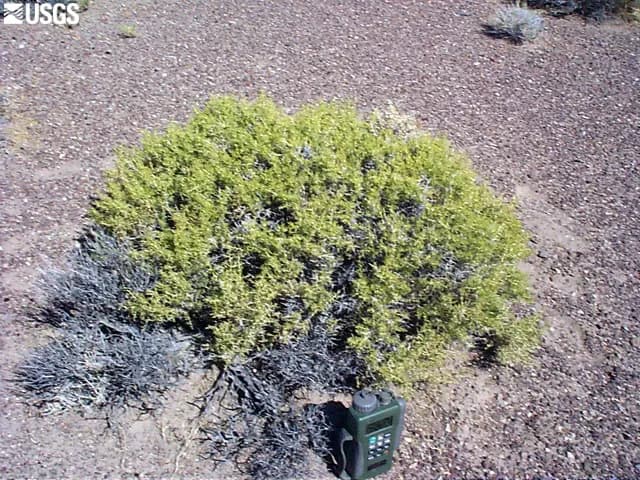
Sarcobatus baileyi is an outdoor plant known for its bushy appearance and resilience to arid conditions. It thrives in well-drained, sunny soils.
Open-data facts
- Life form
- Lives as a shrub in the wild.
- Climate
- Desert or xerophytic shrubland climate.
- Origin / area
- In its natural state, it is primarily linked to: Nevada.
Traits (USDA)
- Botanical group
- USDA classification: Dicot. Practically, it's a plant with two cotyledons.
- Duration
- Perennial plant: once established, it can accompany you through many seasons.
- Growth habit
- Develops as a bushy plant, more compact than a tree.
Recommended products for Sarcobatus baileyi
Ecological interactions
Other species it relates to:
Colpocephalum appendiculatum, Phytocoris albidosquamus, Phytocoris plenus, Phytocoris rostratus, Squamocoris utahensis, Lygus elisus, Orthotylus albocostatus, Hoplinus echinatus
Basic care
- Watering
- Infrequent watering; excess moisture easily rots roots.
- Light
- Harden it off gradually if it came from shade.
- Temperature
- On cold nights, pull it back from exposed glass.
- Humidity
- Tolerates dry air; no humidifier needed.
Pet toxicity
Still, don’t let pets eat large amounts—any plant can upset a stomach.
Cats: no (typical guidance). Dogs: no (typical guidance).
Sources
- Wikidata (Q17252731) — taxonomic data CC0
- GBIF (3083993) — taxonomy and vernacular names
- POWO / WCVP (227691-2) — taxonomy and distribution (WCVP/Kew, CC BY)
- WFO (wfo-0001294810) — world taxonomic checklist (CC0)
- USDA PLANTS (SABA14) — conservation characteristics (USDA PLANTS, public domain)
- GloBI — species interactions (CC BY)
- Care texts are Botanico templates chosen by each plant’s care level (guidance only).