Plant profile
Silene dichotoma
Silene dichotoma Ehrh.
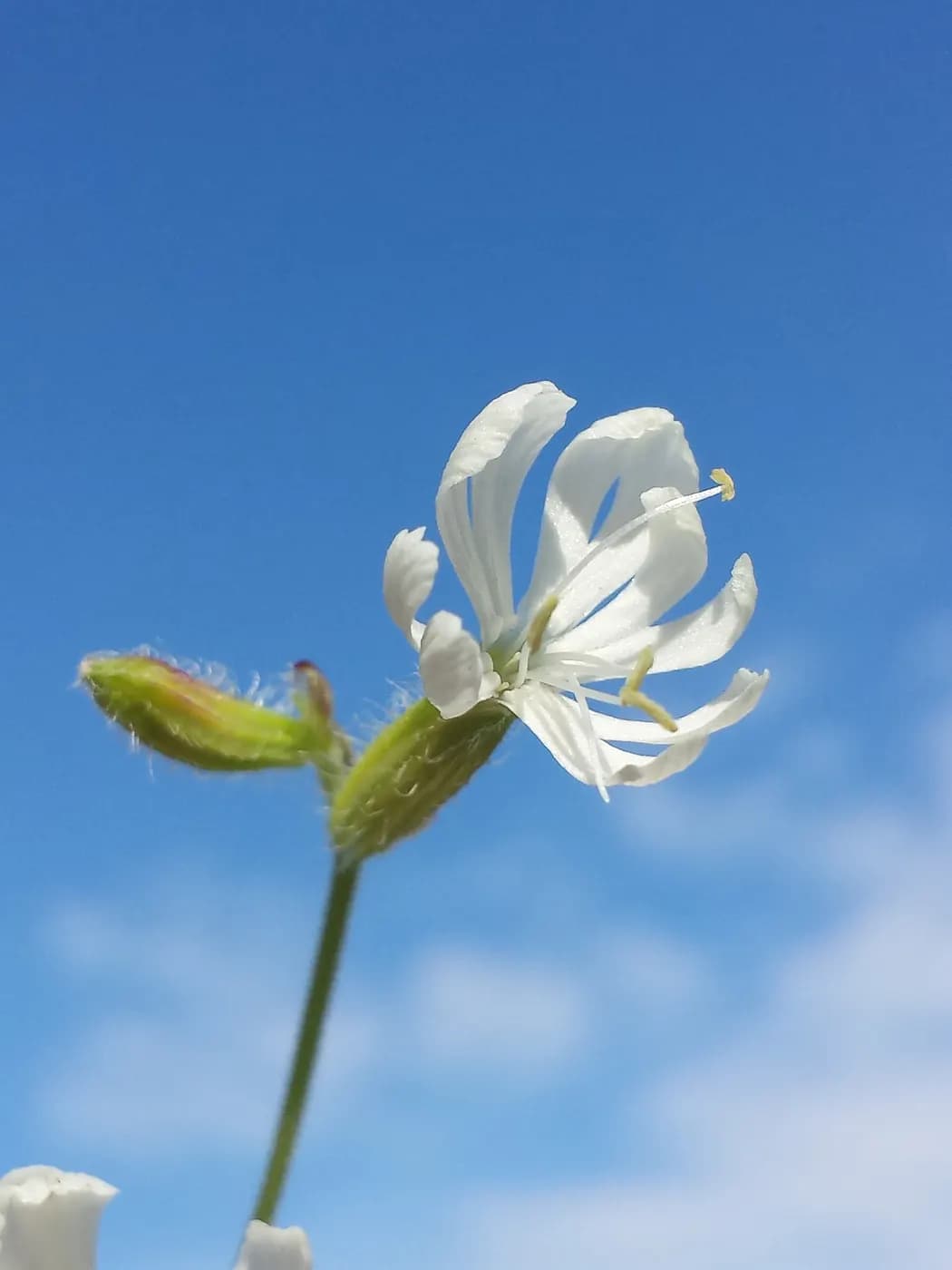
Silene dichotoma is a plant suitable for both indoor and outdoor cultivation, characterized by its attractive flowers and branching growth habit.
From Wikipedia
Silene dichotoma is a species of flowering plant in the family Caryophyllaceae known by the common name forked catchfly. It is native to Eurasia and it is known in other parts of the temperate world, such as sections of North America, where it is a weed that grows in disturbed habitat. It is an annual herb growing up to 80 centimeters tall. The lance-shaped leaves are up to 8 centimeters long on the lower stem and are smaller higher up. Each flower is encapsulated in an inflated calyx of sepals lined with ten veins. It is open at the tip, revealing five white to red petals, each with two lobes and sometimes taking a curled form.
Silene dichotoma — Text CC BY-SA. See the original article.
Open-data facts
- Life form
- annual or biennial
- Climate
- Its natural climate is temperate: distinct summers and winters.
- Origin / area
- Documented area of origin: Italy to W. Siberia and Iran.
- Documented uses
- Weed
Traits (USDA)
- Botanical group
- Botanically, it's a dicot, in contrast to monocots like lilies or palms.
- Duration
- This is an annual plant: it completes its cycle in a single season and then expires.
- Growth habit
- As a forb, its structure is more herbaceous than woody.
Recommended products for Silene dichotoma
Ecological interactions
Acts as a host plant for:
Septoria melandrii, Phyllosticta, Phyllosticta nebulosa, Uromyces behenis, Microbotryum violaceum, Septoria dimera, Hadena bicruris, Sideridis rivularis…
Insects and animals that pollinate it:
Lasioglossum sabulosum, Lasioglossum semilucens, Bombylius medius, Osmia bicornis, Bombylius cinerascens, Gonepteryx rhamni, Bombus terrestris, Harmonia axyridis…
Eaten by:
Hadena luteago, Rhopalus conspersus, Plusia festucae, Polymixis rufocincta, Cucullia absinthii, Caryocolum delphinatella, Brachycolus cucubali, Hadena laudeti…
Basic care
- Watering
- In heatwaves, water a bit more—without overdoing it.
- Light
- An east or west window with some filter often works well.
- Temperature
- Keep off blasting radiators and open cold doors.
- Humidity
- Air the room a little if the air feels heavy.
Pet toxicity
In a pet household, prioritise an inaccessible spot.
Cats: yes (toxic). Dogs: yes (toxic).
Sources
- Wikidata (Q3738804) — taxonomic data CC0
- GBIF (5384818) — taxonomy and vernacular names
- POWO / WCVP (157226-1) — taxonomy and distribution (WCVP/Kew, CC BY)
- WFO (wfo-0000440487) — world taxonomic checklist (CC0)
- USDA GRIN — uses and distribution (USDA GRIN, public domain)
- USDA PLANTS (SIDI2) — conservation characteristics (USDA PLANTS, public domain)
- Wikipedia — lead extract (CC BY-SA)
- GloBI — species interactions (CC BY)
- Care texts are Botanico templates chosen by each plant’s care level (guidance only).