Plant profile
Pepper-bark tree
Warburgia salutaris (G.Bertol.) Chiov.
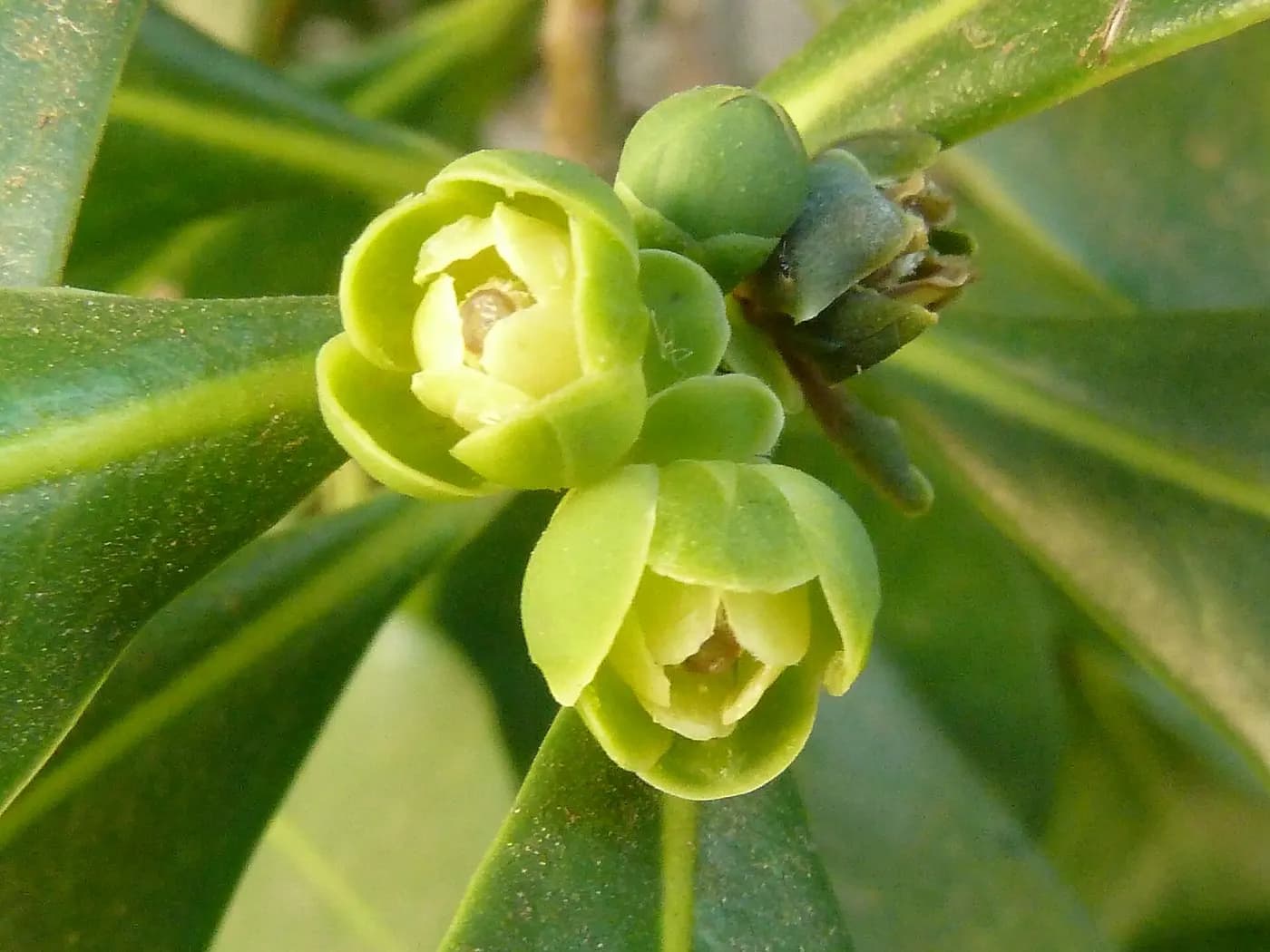
An outdoor evergreen tree with glossy, leathery, aromatic leaves. Grow it in a warm climate in well-drained soil and protect it from frost.
From Wikipedia
Warburgia salutaris is a species of tree in the family Canellaceae. It is native to southwestern Africa, including Mozambique, Zimbabwe, and KwaZulu-Natal the Northern Provinces of South Africa. It is threatened by habitat loss. It is a popular medicinal plant and is overharvested in the wild, another reason for its endangerment. The Pepper-bark tree is a protected tree in South Africa. Various projects are investigating methods of propagation under controlled conditions with subsequent planting in the wild.
Warburgia salutaris — Text CC BY-SA. See the original article.
Open-data facts
- Life form
- Life form: shrub or small tree. Can remain as a woody bush or gain tree-like stature.
- Climate
- Tropical climate with a dry season: warmth and a clearly defined dry period.
- Origin / area
- According to taxonomic sources, it comes from: Zimbabwe to KwaZulu-Natal.
- Documented uses
- Medicines
Recommended products for Pepper-bark tree
Ecological interactions
Uses it as a host:
Lichtensia carissae, Parasaissetia nigra, Papilio nobilis, Myscelus nobilis
Can be affected by pathogens such as:
Ceratitis fasciventris, Ceratitis cosyra
Eaten by:
Papilio nobilis
Basic care
- Watering
- Check the mix with a finger before every watering.
- Light
- Full sun: needs many hours of direct light.
- Temperature
- In winter, avoid sharp temperature drops.
- Humidity
- Moderate humidity plus good air movement.
Pet toxicity
In a pet household, prioritise an inaccessible spot.
Cats: yes (toxic). Dogs: yes (toxic).
Sources
- Wikidata (Q142235) — taxonomic data CC0
- GBIF (5603223) — taxonomy and vernacular names
- POWO / WCVP (146036-1) — taxonomy and distribution (WCVP/Kew, CC BY)
- WFO (wfo-0000427579) — world taxonomic checklist (CC0)
- USDA GRIN — uses and distribution (USDA GRIN, public domain)
- Wikipedia — lead extract (CC BY-SA)
- GloBI — species interactions (CC BY)
- Care texts are Botanico templates chosen by each plant’s care level (guidance only).