Plant profile
ZZ plant
Zamioculcas zamiifolia (G.Lodd.) Engl.
Family: Araceae · Genus: Zamioculcas
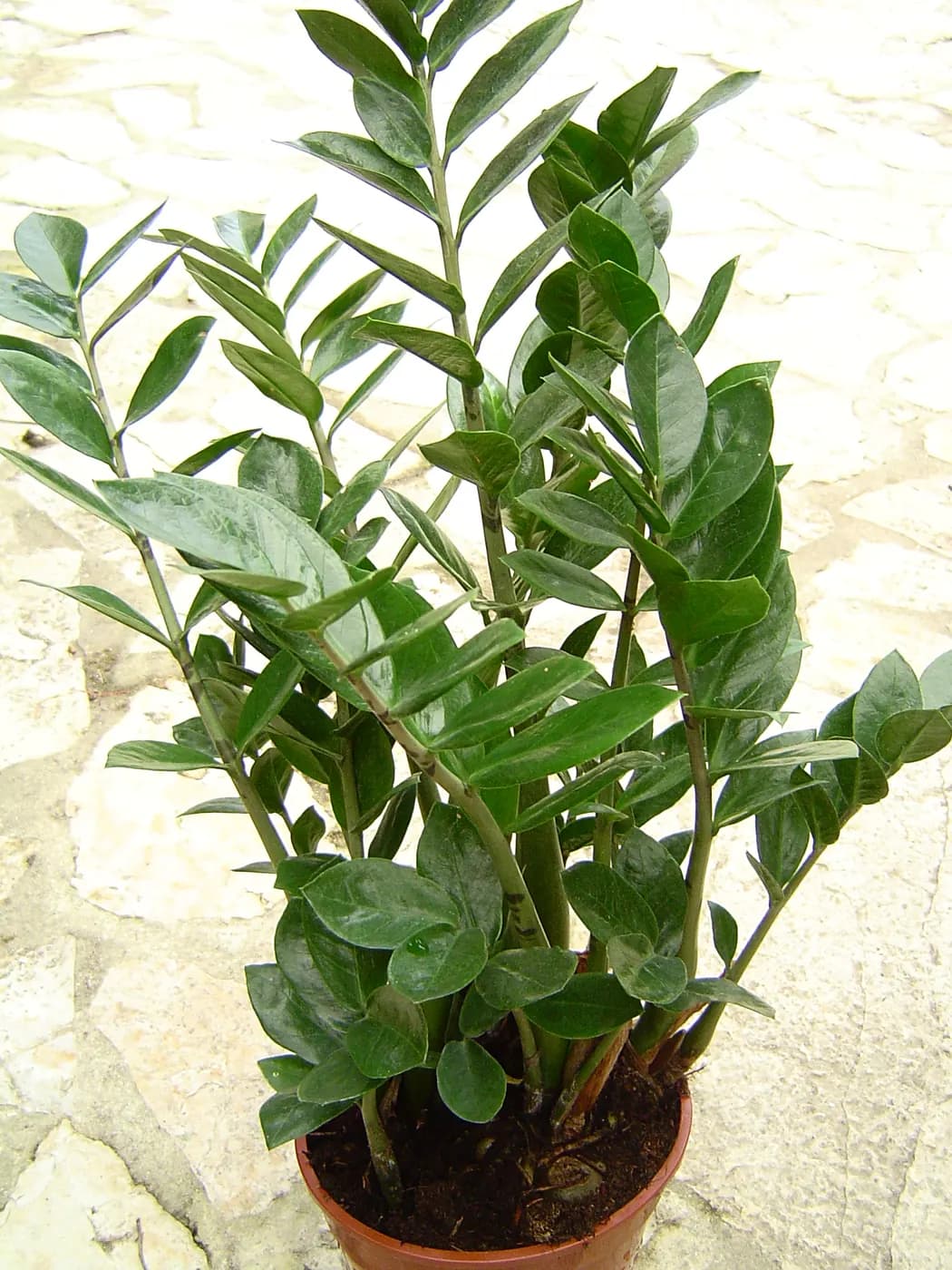
The ZZ plant: nearly indestructible indoors. Slow growth with very little water.
From Wikipedia
Zamioculcas is a genus of flowering plants in the family Araceae, containing the single species Zamioculcas zamiifolia. It is a tropical herbaceous perennial plant, and is native to eastern Africa, including Kenya, KwaZulu-Natal, Malawi, Mozambique, Tanzania, and Zimbabwe. Its common names include Zanzibar gem, Zuzu plant, emerald palm, ZZ plant, aroid palm and eternity plant. It is commonly grown as a houseplant, mainly because it has attractive glossy foliage and is easy to care for. Zamioculcas zamiifolia is winter-hardy in USDA Zones 9 and 10.
Zamioculcas — Text CC BY-SA. See the original article.
Open-data facts
- Life form
- Its biology is perennial, not strictly annual.
- Climate
- Tropical climate with a dry season: warmth and a clearly defined dry period.
- Origin / area
- According to taxonomic sources, it comes from: Kenya to KwaZulu-Natal.
- Native distribution
- It appears natively in: Kenya, Eastern Tropical Africa, Africa · Tanzania, Eastern Tropical Africa, Africa · Malawi, Southern Tropical Africa, Africa · Mozambique, Southern Tropical Africa, Africa · Zimbabwe, Southern Tropical Africa, Africa · KwaZulu-Natal, Southern Africa, Africa.
Recommended products for ZZ plant
Ecological interactions
Other species it relates to:
Chrysomphalus dictyospermi
Acts as a host plant for:
Athelia rolfsii, Colletotrichum cliviae, Phytophthora nicotianae
Basic care
- Watering
- If unsure, wait a couple more days before watering again.
- Light
- Manages in rooms with only gentle daylight.
- Temperature
- On cold nights, pull it back from exposed glass.
- Humidity
- Strong heating is rarely a serious problem.
Pet toxicity
See a vet if you suspect your pet has eaten any part.
Cats: yes (toxic). Dogs: yes (toxic).
Sources
- Wikidata (Q15312475) — taxonomic data CC0
- GBIF (2869014) — taxonomy and vernacular names
- POWO / WCVP (89402-1) — taxonomy and distribution (WCVP/Kew, CC BY)
- WFO (wfo-0000335147) — world taxonomic checklist (CC0)
- USDA GRIN — uses and distribution (USDA GRIN, public domain)
- Wikipedia — lead extract (CC BY-SA)
- GloBI — species interactions (CC BY)
- Care texts are Botanico templates chosen by each plant’s care level (guidance only).